Grain, Carbon and Witnessing the Future
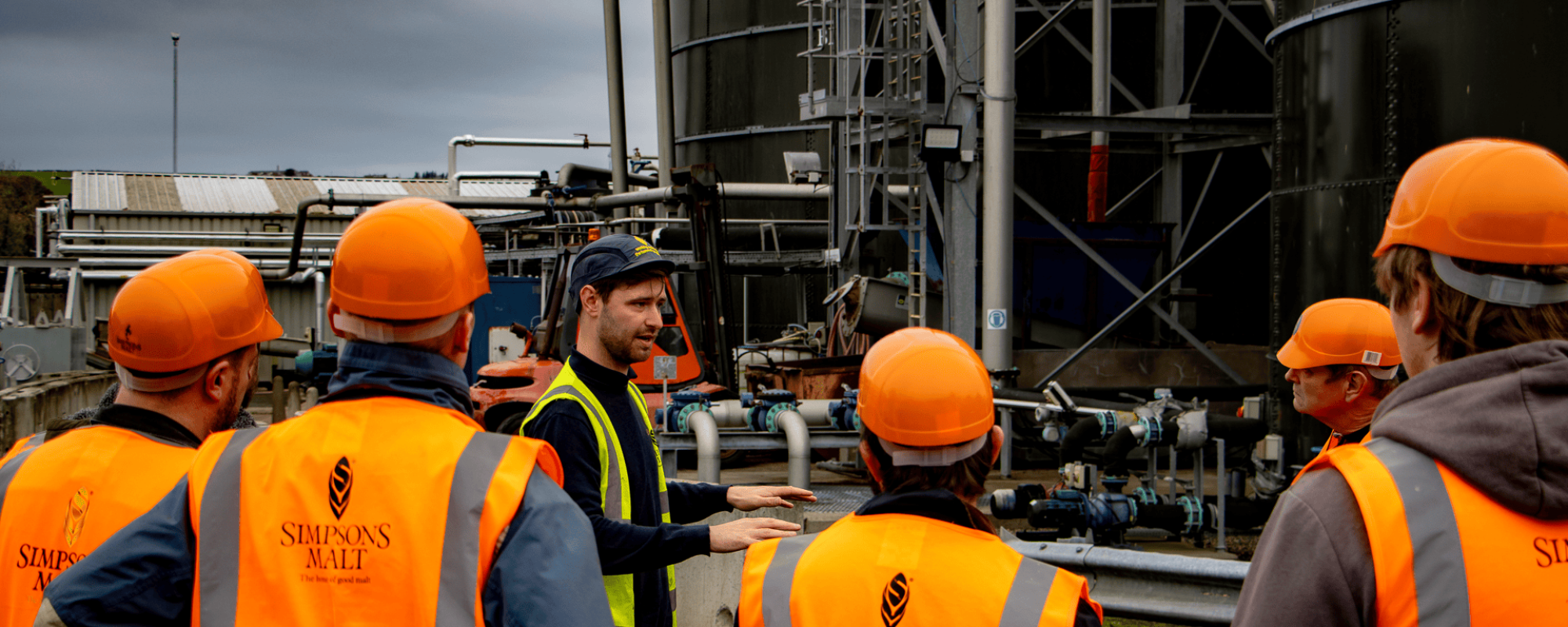
It’s been about a year since we switched our grain supply to Simpsons Malt in Berwick-upon-Tweed. A couple of weeks ago we went up as a team to see where Fell’s grain comes from and to witness their decarbonisation in action. It was genuinely inspiring.

As I wrote previously, the switch has delivered great results and efficiency savings on the most carbon-intensive input to our beer, grain. This trip was about stepping into our supply chain and understanding more about the system we’re part of. Simpsons operates the UK’s largest malting facility yet remains proudly independent and family-owned (since 1862). Their commitment to stakeholders is obvious on site, and their forthcoming updated B Corp score will underline it.
Grain is a commoditised business. The war in Ukraine reminded us how exposed global supply can be, while UK family farms have long been forced to compete with whoever can supply cheapest worldwide. An obsession with yields and heavy Haber–Bosch fertiliser use has eroded soils, habitats and the natural systems that should provide community resilience. In a world quietly turning its back on ESG, it’s heartening to see a partner rejecting that trend—not with grandstanding, but with calm conviction. Their approach has two purposeful strands: on-farm change and energy at the maltings.
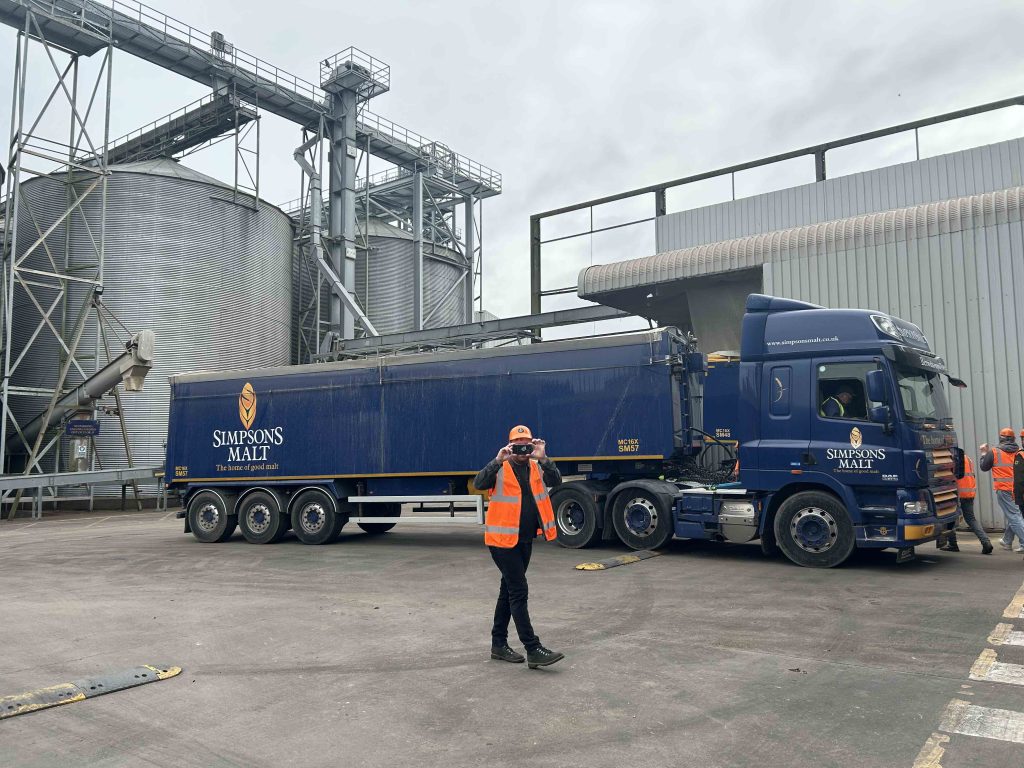
On farm, Simpsons’ relationship with growers is different. Decades of partnership mean they know where every kernel of barley originates and what happens in those fields. Instead of relying on third-party grain merchants, they effectively handle that function in-house, giving unparalleled access to farmers. Their sustainability team is out on farms every week, working methodically to bring about practical change. Scan the QR code on a bag and you can see the farms behind that batch and the carbon footprint of that exact malt. Decarbonising arable isn’t easy—you get one harvest a year and livelihoods ride on it—but collaboration is paying off. They track fertiliser and diesel use, rotations, cover crops and more, and they’re showing soil carbon can rise without sacrificing yields, while improving land resilience. If you’re sceptical, look closely: change is happening.
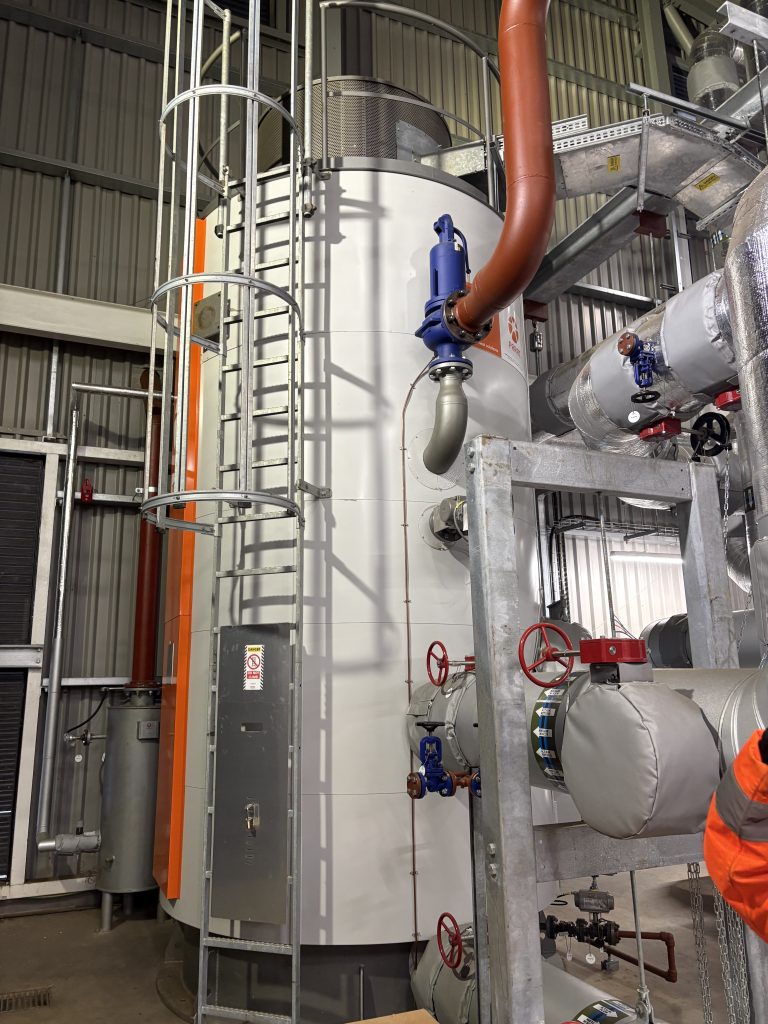
At the maltings, we toured the new energy centre. Kilning thousands of tonnes of fresh malt used to burn huge volumes of natural gas; they told us a single kiln once roughly doubled Berwick-upon-Tweed’s gas demand. No longer. After a major investment, their energy centre has eliminated fossil fuels from production. Most of the time, three furnaces heat high-pressure water using low-value biomass offcuts from nearby Kielder Forest. And there’s a fourth unit: a 12 MW “giant kettle” that kicks in when curtailed wind power is available; electricity that would otherwise be wasted to balance the grid. Deals like this will become the norm for energy-intensive industries. The carbon saving at Berwick is enormous (1000s of tonnesCO2e). It took courage, belief and the flexibility that comes with being an independent, family business. I left inspired.
The 12MW Curtailed Wind Boiler
I’ve done site tours before and come away uneasy. Two years ago, when we received Fell’s carbon footprint, I assumed we’d be pushing suppliers to change how they operate. Leaving Simpsons, I felt proud—and challenged to raise our own game to stand alongside a partner pursuing real sustainability the hard way: by getting stuck in and changing things. There’s more to come, and I hope to share good news soon. We’ve still got a way to go, but digging into our grain supply has been a genuinely uplifting step.