Free delivery for orders over £60
Decarbonising a small brewery is complicated. It involves a whole array of measures that all add up, hopefully and progressively, to remove the fossil fuel derived carbon from our production and supply chain. Some of those steps themselves are very complicated. Some will involve fancy machines that are difficult to understand. Some of them will be very straightforward. I am thrilled to report one of these such measures today.
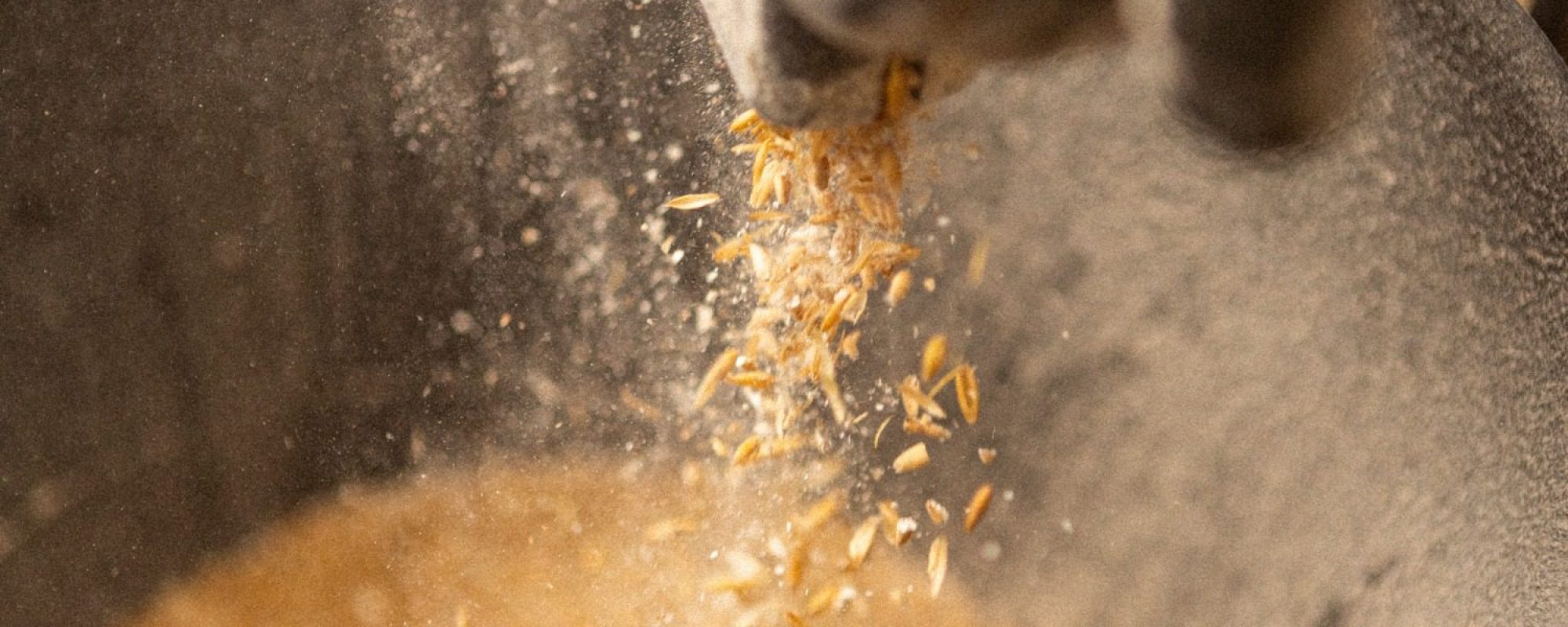
When we had our numbers crunched and discovered the true picture of our emissions, we were unsurprised to learn that the grain we use to make beer is our single biggest source of emissions. Barley is both carbon intensive to grow, thanks to large requirements for Haber-Bosch fertilisers, and then requires lots of energy to malt into the grains we need to make our beers. We always knew that a lot of our sustainability work would have to focus on grain. We needed to find more sustainable grain with lower emissions, which we have. However, we also needed to frankly just use less of it, or rather get more beer out of the grain we buy. It is progress on this latter point that I’m so pleased with.
In an ideal brewery, every single last molecule of starch would be perfectly converted and dissolved into our wort. Then, every single morsel of sugar in the wort would end up in our fermenters. Lastly, every single sip of the beer this produced would be packaged into containers ready for our customers to enjoy without spilling or wasting a single drop. Needless to say, Fell Brewery, like every other brewery on earth, is far from perfect in this sense and will never be so. That said, we can try harder to get as close to this position as possible.
I joke that if I told the brewers at Fell to be more careful with our grain as it costs good money, they would tell me where to stick it. This isn’t a fair reflection of their attitudes. I think they would agree with me, however, that having framed grain as our single biggest source of carbon emissions, this has meant all of us now view its use through a different lens.
So how do you go about making a brewing operation more efficient in its use of grain? You do lots of different things, all of which individually are quite boring, time consuming and are ultimately about being careful, more accurate and just generally more vigilant in our processes. A massive credit is owed to our brew team for doing just this. They have spent hours wrestling with flowmeters, data sheets and recipes to make sure that much more of the bang from each buck of malt ends up in yourglass or can. They have massively surpassed my expectations in doing so and, frankly, have made a mockery of the target I originally set them.
I’ll try and keep the numbers themselves simple. In our original accounting window for our carbon footprint, they used a certain amount of grain to brew a certain amount of beer. Following their efforts, in a year long sample window going up to the start of this July, they packaged 11% more beer using 9% less grain overall. That amounts to an overall improvement in the efficiency of our production of 21%. To put that in carbon terms, this work alone has reduced the carbon intensity of our beer by something like 15gCO2e/L and about 5% overall from our 2023 starting point. We are very pleased with these results.
I think there are 2 key messages to convey from this work. Firstly, reducing your emissions doesn’t have to involve £1000s of upfront investment and scouring the world for better options in your supply chain. Using what you already use more efficiently is pivotal to our efforts to decarbonise as a society. It’s that simple.
Secondly, the commerciality of this work speaks for itself. Not only have our brewers, through disciplined belt and braces work, reduced our carbon emissions. They have also saved the brewery real money. The further we travel on this journey, the more we realise that decarbonising our business is not only good for the planet, but also for our finances. The sooner more people wake up to this, the quicker we’ll change things. Hats off to the brew team. They’ve done a fantastic job.
Cheers,
Tim